 BEI
BEI 
Non-violent and participatory election is the people's demand: Field experience of Bangladesh Enterprise Institute.
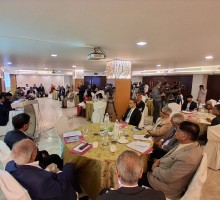
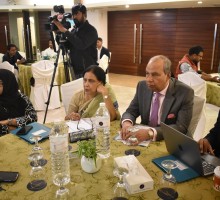
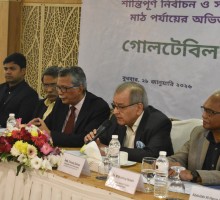
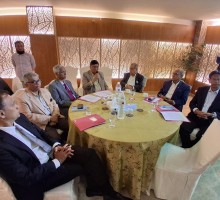
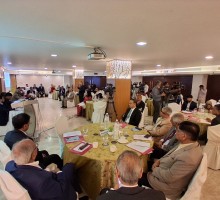
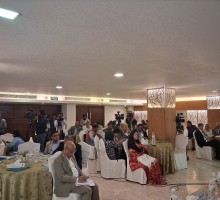
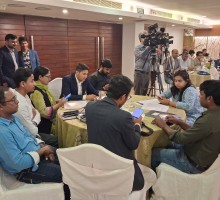
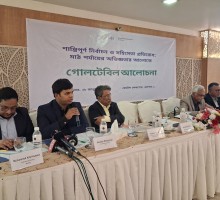
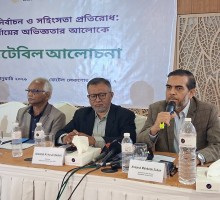
The Bangladesh Enterprise Institute (BEI) organized a roundtable discussion titled “Peaceful Elections and Prevention of Violence: In Light of Field Experiences” was held on 28 January 2026, Wednesday at Hotel Lakeshore, Gulshan, Dhaka, where BEI’s field-level experiences highlighted that the people of Bangladesh are expecting a fair, non-violent, and participatory election. The event brought together representatives from political parties, civil society, media, business community, and women and youth groups to exchange views on ensuring peaceful and inclusive elections ahead of the upcoming national polls.
Professor Dr. Ali Riaz, Special Assistant to the Chief Adviser and Chief Coordinator of public awareness campaign activities regarding the 13th National Parliamentary Election and Referendum, attended the discussion as the Chief Guest. In his remarks, he stated that the 13th National Election, scheduled to be held on February 12, is distinct from the previous twelve elections due to the political context shaped by the July Uprising of 2024. Referring to women’s representation in parliament, he noted that the Consensus Commission had made sincere efforts and that political parties agreed in principle to increase women’s seats to 100, though consensus on the implementation mechanism could not be reached. He also emphasized the necessity of constitutional amendments in this regard.
Representatives from various political parties shared their perspectives during the discussion. Abdulla Al Harun (Sohel), Chairman of the National Democratic Party, expressed hope for a peaceful and participatory election and suggested that another referendum may be required after the election. Muhammad Altaf Hussain, Joint General Secretary of the AB Party, raised concerns about online harassment of women. Alauddin Mohammad, Joint Member Secretary of the NCP, pointed out that confusion is being created by some parties regarding the referendum and stressed that repeated neglect of the rule of law is weakening incentives to uphold it. Dr. Mushtaq Hossain of Jasad questioned the necessity of the referendum, while Zubayer, Assistant General Secretary of Jamaat-e-Islami, condemned ongoing media trials against his party.
In his opening remarks, BEI President Ambassador (Retd.) M. Humayun Kabir stated that based on consultation meetings, surveys, and exchange meetings conducted in five districts, BEI observed significant enthusiasm among the people—particularly the youth—regarding the election. However, he also noted public concerns over election-related violence and the non-implementation of the July Charter. BEI Distinguished Fellow and Board Member Ambassador (Retd.) Farooq Sobhan emphasized that ensuring a peaceful election requires a joint commitment by both candidates and citizens.
BEI Deputy Director Chowdhury Samiul Haque, in his presentation, highlighted the importance of field-level experiences and dialogue-based interventions in preventing violence and fostering a peaceful democratic environment. Drawing from citizen–candidate dialogues across different constituencies, he analyzed key issues including public concerns and expectations, regional diversity, the role of youth, information-related risks, and the growing crisis of institutional trust. He emphasized that beyond security measures, trust-building, transparency of information, accountability, and continuous dialogue are essential to ensuring peaceful elections.
At the conclusion of the discussion, participants collectively called for the implementation of a free, fair, inclusive, and violence-free election that reflects the aspirations of the people. Strong concerns were also expressed regarding the need to enhance women’s participation in both the electoral process and political representation.